
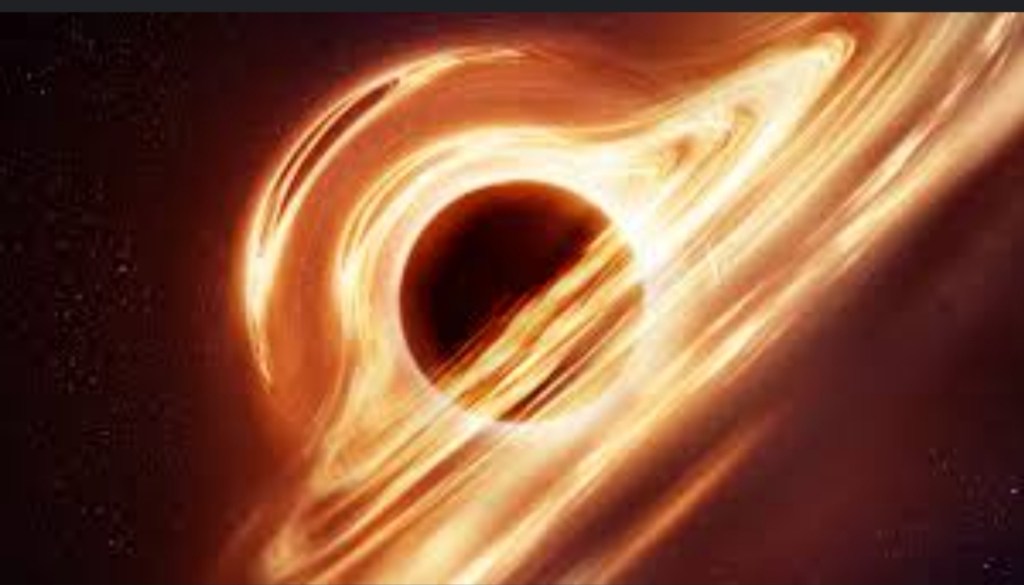
Black holes. (deadly creatures of the universe)

Black holes are one of the most fascinating and mysterious objects in the universe. These celestial objects are formed when massive stars collapse under their own gravitational pull, creating a region of space with an intense gravitational field that nothing can escape from, not even light. The gravitational force of a black hole is so strong that it warps space and time around it, creating a region called the event horizon, beyond which nothing can escape.

Black holes come in different sizes, ranging from small black holes the size of a single atom to supermassive black holes that are billions of times more massive than the sun. Supermassive black holes are thought to exist at the center of most galaxies, including our own Milky Way galaxy.

Despite their extreme nature, black holes play a crucial role in our understanding of the universe. They have helped to confirm some of the fundamental predictions of Einstein’s theory of relativity, including the idea that the fabric of space and time is warped by massive objects. Black holes have also provided insights into the evolution of galaxies and the universe as a whole.

In recent years, astronomers have made significant progress in observing black holes and their properties. This has been made possible by advances in technology, such as the development of more sensitive telescopes and gravitational wave detectors. The detection of gravitational waves, ripples in space-time caused by the collision of black holes, has opened up a new window into the universe and provided unprecedented insights into the nature of black holes.

Despite our growing knowledge about black holes, there is still much that remains unknown about these enigmatic objects. Some of the biggest mysteries include what happens beyond the event horizon, what happens to information that falls into a black hole, and whether black holes can merge to form even larger black holes.

Overall, black holes are fascinating objects that continue to captivate scientists and the public alike. They represent some of the most extreme and exotic phenomena in the universe and have already provided valuable insights into the nature of gravity, space, and time. As our understanding of black holes continues to grow, we can expect even more exciting discoveries in the future
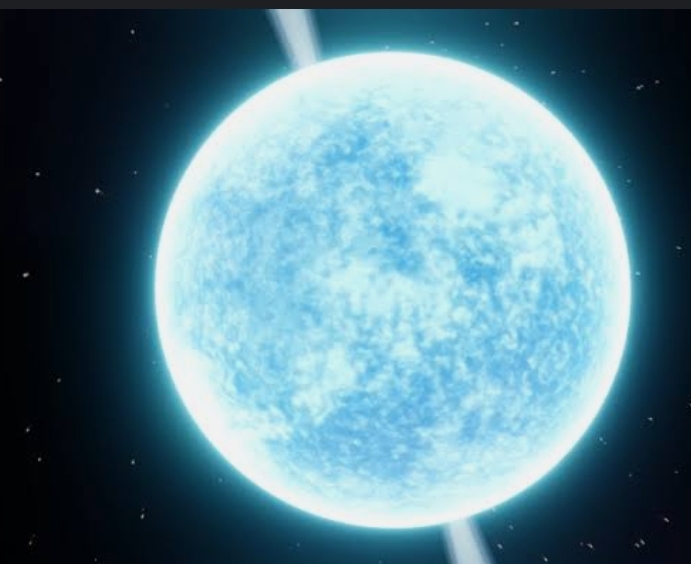
Uncovering the Mysteries of Neutron Stars”

Neutron stars are one of the most exotic objects in the universe, and they are formed from the remnants of massive stars that have undergone supernova explosions. They are incredibly dense, with a mass approximately 1.4 times that of the Sun packed into a sphere just 20 kilometers (12 miles) across. This extreme density gives neutron stars some unique properties and makes them fascinating objects for scientists to study.

Neutron stars are composed almost entirely of neutrons, which are subatomic particles that have no electrical charge. They are formed when the core of a massive star collapses under the force of gravity during a supernova explosion. As the core collapses, the pressure and temperature increase until the protons and electrons in the atoms are squeezed together to form neutrons. The result is a ball of neutrons that is incredibly dense and has a gravitational pull so strong that it can crush atoms and particles to almost nothing.

One of the most remarkable things about neutron stars is their incredibly strong magnetic fields. Neutron stars can have magnetic fields that are trillions of times stronger than the Earth’s magnetic field. These strong magnetic fields give rise to a phenomenon called pulsars, which are rapidly spinning neutron stars that emit beams of radiation from their magnetic poles. These beams of radiation can be detected by radio telescopes on Earth, and they appear to blink on and off as the neutron star rotates, giving rise to the name “pulsar.”

The rotation of a neutron star can be incredibly fast, with some neutron stars spinning hundreds of times per second. This rapid rotation can also give rise to intense gravitational waves, which are ripples in the fabric of spacetime that are created when massive objects accelerate. These gravitational waves were predicted by Einstein’s theory of general relativity and were detected for the first time in 2015 by the Laser Interferometer Gravitational-Wave Observatory (LIGO).

Neutron stars can also be incredibly hot, with surface temperatures reaching millions of degrees Celsius. This heat is generated by the residual energy from the supernova explosion that created the neutron star, as well as from the intense gravitational forces that are present on the surface. The heat is also responsible for the X-rays that are emitted by neutron stars, which can be detected by X-ray telescopes in space.

Because of their extreme properties, neutron stars have been the subject of intense study by scientists for decades. In addition to their magnetic fields and radiation emissions, scientists are interested in the properties of the matter inside neutron stars. The density and pressure inside a neutron star are so extreme that they can provide insight into the fundamental nature of matter itself.

The study of neutron stars has also provided important insights into the nature of the universe. For example, the discovery of pulsars in the 1960s provided the first direct evidence for the existence of neutron stars, which had been predicted by theory but had not yet been observed. More recently, the detection of gravitational waves from neutron star mergers has provided important information about the behavior of matter under extreme conditions.

In summary, neutron stars are incredibly dense and magnetic objects that are formed from the remnants of massive stars that have undergone supernova explosions. They are fascinating objects for scientists to study because of their extreme properties and their potential to provide insight into the fundamental nature of matter and the universe itself